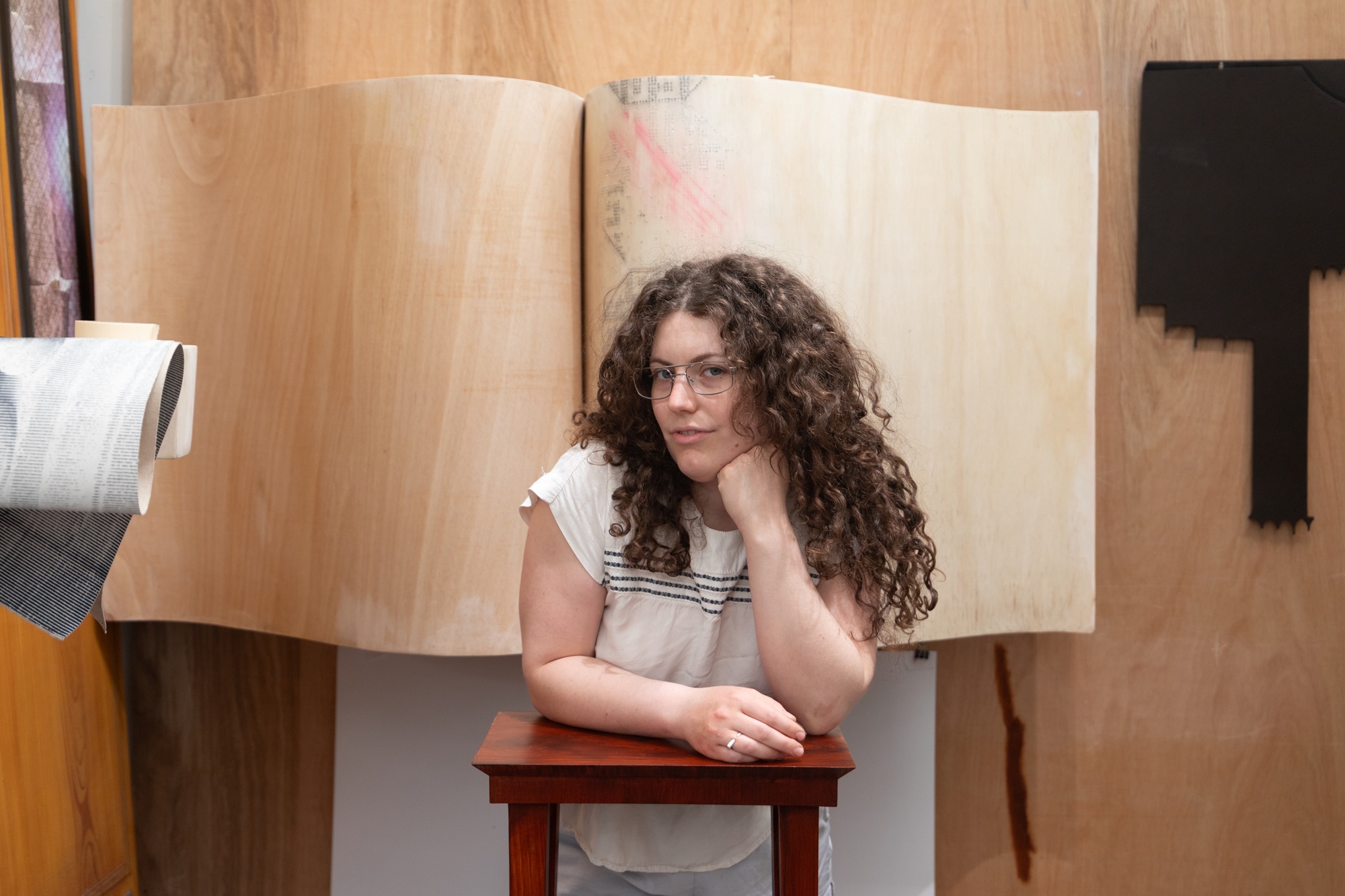
Photo: Sophie Smoczewski
Maya Silverberg is a Hungarian-American multidisciplinary artist whose work investigates painting’s status as both fine and decorative art. Trained in traditional trompe l’oeil painting, she works between image and object.
Can you tell us a bit more about your work?
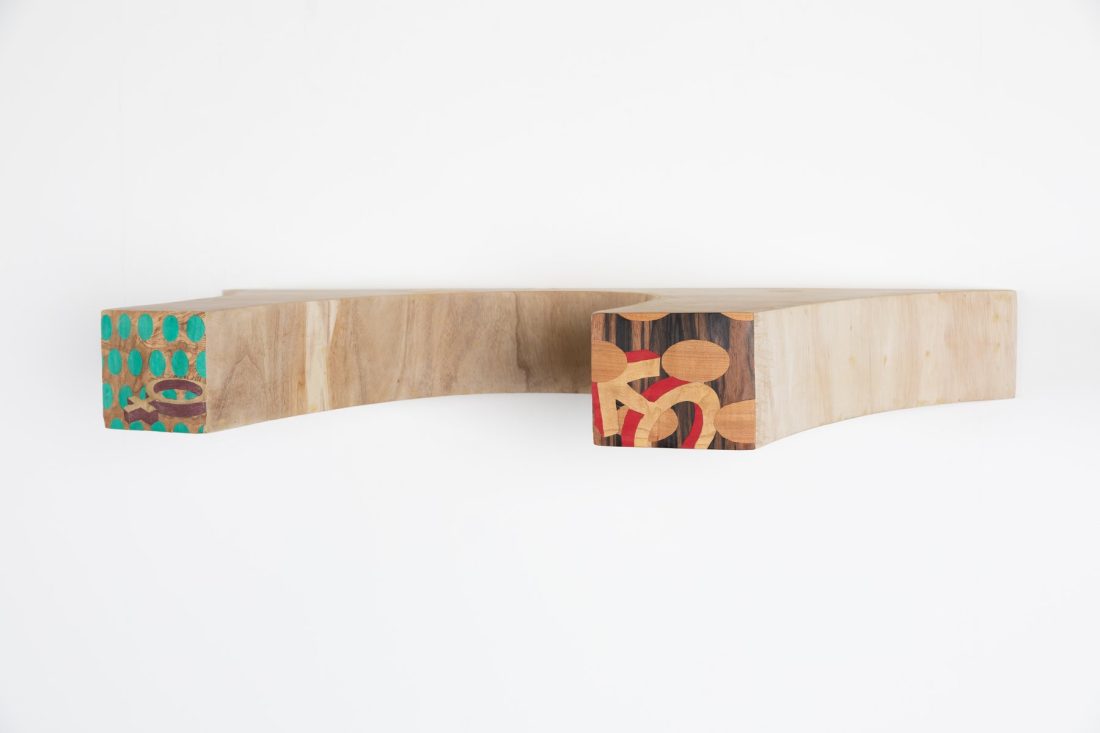
In my practice, I’m trying to articulate a relationship between the fine and decorative arts. I produce multimedia objects, working across painting, wooden sculpture, silkscreen printmaking, collage, and digital photography.
I think about style and how process and technique might have aesthetic resonance. For example: is nailing an aesthetic art? What happens if we take something like that seriously as a gesture with aesthetic functions and symbolic implications? I don’t believe any process is inherently artistic or not artistic.
I would describe myself as a conceptual artist—but one who loves making things. I love stuff. I think that when you make something, it has a totally different existence than it does as an idea, because you encounter it as material. And somehow the material, through actually existing in the world, is always going to have different qualities than you would imagine. So even in a world with too many objects, I still think it’s valuable to make new ones.
At the decorative painting school where I trained, my teacher said, “Man thinks with his hand.” And I thought: that’s everything. That’s exactly how I work. I think through making. For me, concept, material, process, and outcome are one thing. The work doesn’t exist outside of being made.
You’re trained in traditional trompe l’oeil painting. What was your training like?
From 2021–2022, I trained in trompe l’oeil and decorative painting at the renowned Van der Kelen Institute in Brussels. The school promised me something that felt vital—a kind of physical, bodily tradition of making—and that was a big part of why I went. But even before that, I had a strong artistic interest in material which has been consistent throughout my practice.
A part of what makes Van der Kelen special is that it hasn’t changed since the 19th century, both in its pedagogy and in its disciplinary logic. The tutor demonstrates, the students copy. No sitting, no speaking, no paint on your smock—and if you were late, you swept the street.
What is most present in my work is the experience of entering the world of craft and being inducted into a completely different worldview and visual economy, one that is totally distinct from the fine arts and almost its opposite. The source of value was based on submitting to a tradition: learning recipes, rules, and humility. There were ritualistic displays of authority and discipline; often we would work without light or heating. It was a fascinating experience to be inside a world that doesn’t exist anymore, but is kept alive by people who voluntarily maintain it.
Decorative painting is work that happens to use paint—art work—done inside a particular visual economy. It is paid by the job, meaning that efficiency is paramount; every extraneous movement must be eliminated. We were taught to aim for the maximum effect with the minimum effort, a decidedly unartistic attitude. Asking questions was discouraged. So it was a culture shock, and the experience of this dislocation was intensely generative.
I do use the techniques I learned in some of my works—you can see things I clearly learned there—but the real influence was metaphorical. It was a window into another world and another time. It shaped the foundation of my artistic project: materially investigating the techniques, tropes, and pedagogy of craft, and asking what it means for something to be decorative.
You’ve previously said your practice investigates questions around what is considered decoration, craft and fine art. Why are these definitions important for you to unpick?
I think the art world has failed to reckon with the world of craft in a serious way. It has either been completely dismissed or treated as wholly continuous with art. I don’t agree with either interpretation; instead, I understand craft as its own domain, possessing its own conceptual, aesthetic, and material hierarchies. It’s not something I fetishize; I’ve often found the world of craft to be intensely conservative and unimaginative, even anti-intellectual. What I value is the encounter with a completely different way of making and relating to material. I have a similar fascination with the world of building and construction; I plan to undertake an intensive training in joinery at a builder’s college in 2027.
If technique represents a possibility, I want every possibility that I can get. I feel like a vociferous interloper: I want to learn, assimilate, and steal every way of making—to appropriate these techniques and use them to make art. And techniques carry with them ways of thinking.
I care about these definitions and distinctions not to be pedantic, but because the questions are generative. Particularly in terms of ornament and decoration: nobody can define these terms, or style, which they are often boiled down to. But style, however understood, is substantial—it has world-building properties and poetic implications that deserve consideration.
You are quite playful with your use of materials and work across many mediums. Can you tell us a little bit more about how you approach and choose materials?
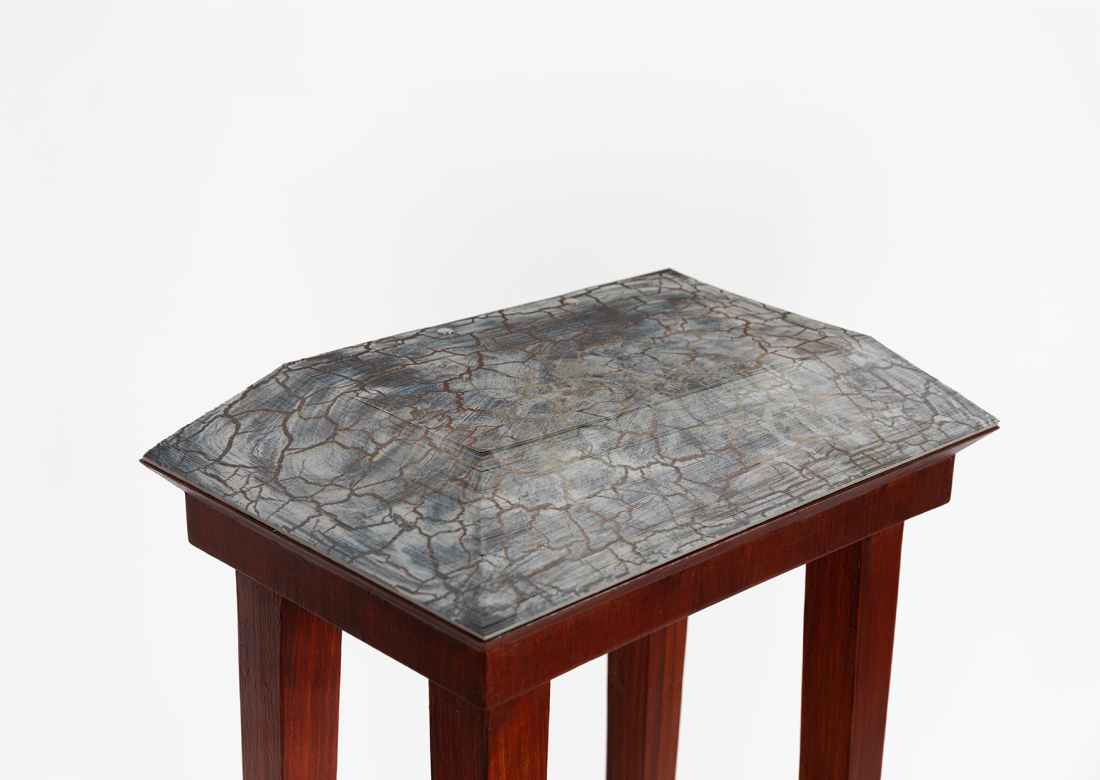
A lot of my practice is very intuitive. I’m constantly surrounded by objects: I scavenge them, source them, and I also make objects that later become my own kind of ready-mades. I make a lot of collages too, not knowing yet what they will become. My practice is a mix: very 19th-century flâneur—walking around the city, picking things up from the street—but also very deliberate. For example, my 2025 solo show at DOXA Budapest used leather offcuts that I sourced from the British saddlery industry through developing an elaborate network of contacts and having intensive conversations with these tradesmen, begging them to give me their trash. I ended up with 100 kilos of it. Some materials very obviously need an intervention. Others don’t. It’s similar when I’m walking around, and I see a composition and I know it wants to become something, a painting or a sculpture, but I don’t know exactly what yet. There’s an architectural rhythm that attracts me, an involuntary aesthetic that comes from accumulated labour: a construction workers’ mark, chipped paint, trash thrown by someone. There’s beauty there.
It sounds simple, but I feel a lot of respect for the material. I want to touch it, handle it, live with it. Often that means spending days and days just looking, thinking, waiting. I don’t always know what will happen. Many of the things in my studio are for the future, waiting for the moment when they reveal what they want to become.
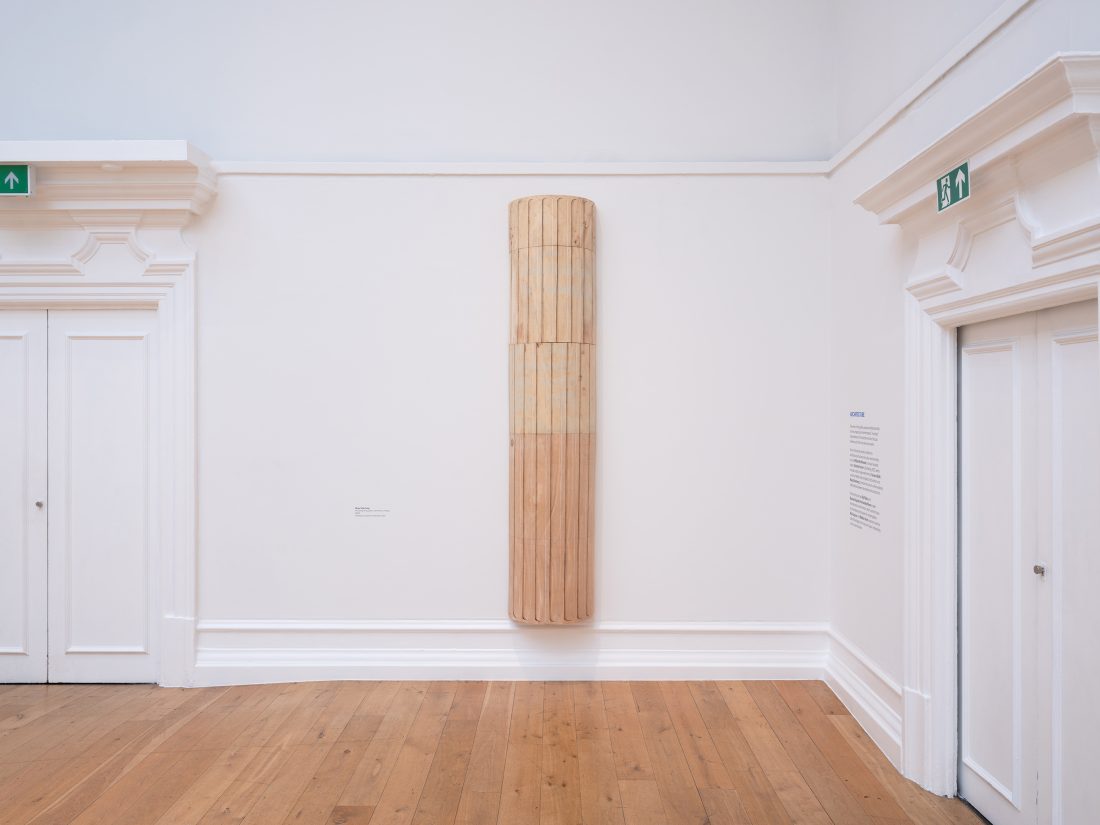
New Contemporaries, South London Gallery 2026. Installation photo by Varvara Uhlik
‘His ability to question, admonish, critique’ is the work you’re showing in New Contemporaries. First of all, where did the title of this work come from? What inspired the piece?
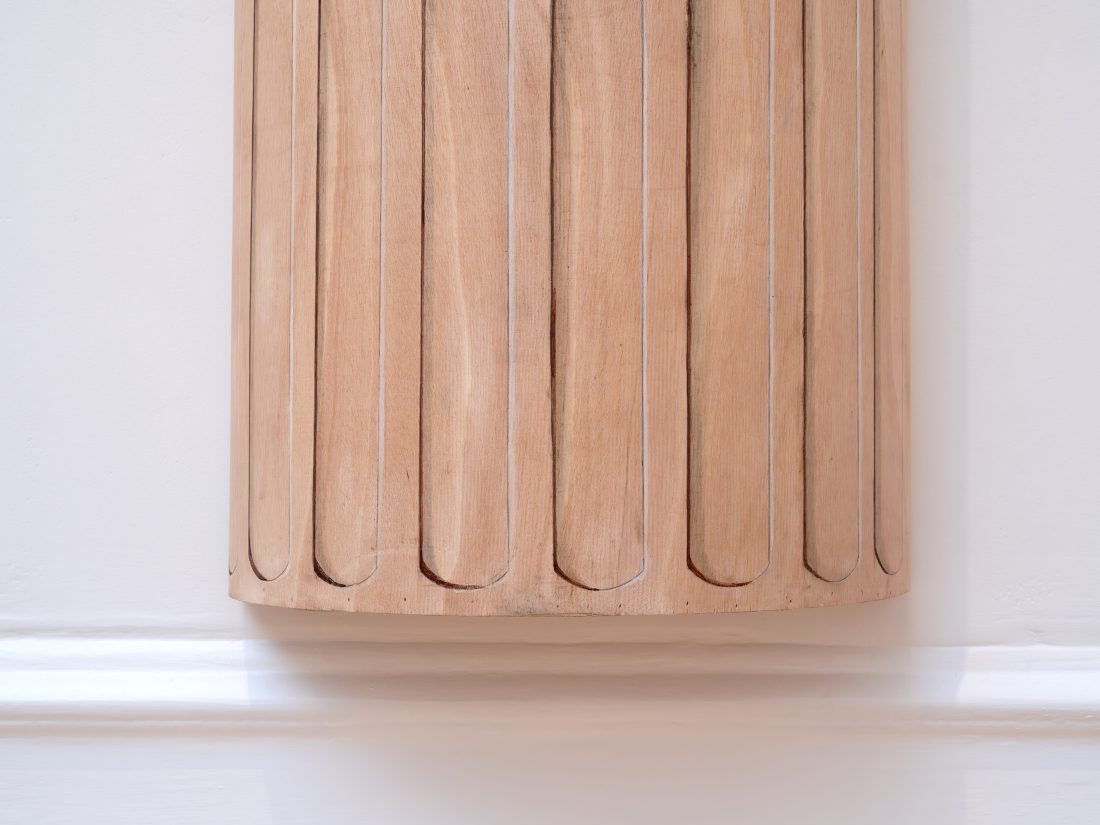
The titles for my artworks are always appropriated. Usually they come from literature or art historical texts. I love being able to plagiarize. I think it’s a real privilege, and I’ll flick through a book until I see an appropriate phrase. After finishing my first large plywood sculpture, I started to have obsessive thoughts about making a plywood column. I declared this intention to my friends, who responded with general confusion, and got to work.
In 2025, Maya Silverberg was selected as one of 26 artists to be part of New Contemporaries. His ability to question, admonish, critique is currently showing at the South London Gallery until 12 April 2026 and will travel to MIMA later in 2026.
Stay up to date with all of our exhibitions and events by signing up to our email list.
New Contemporaries, South London Gallery 2026. Installation photo by Varvara Uhlik