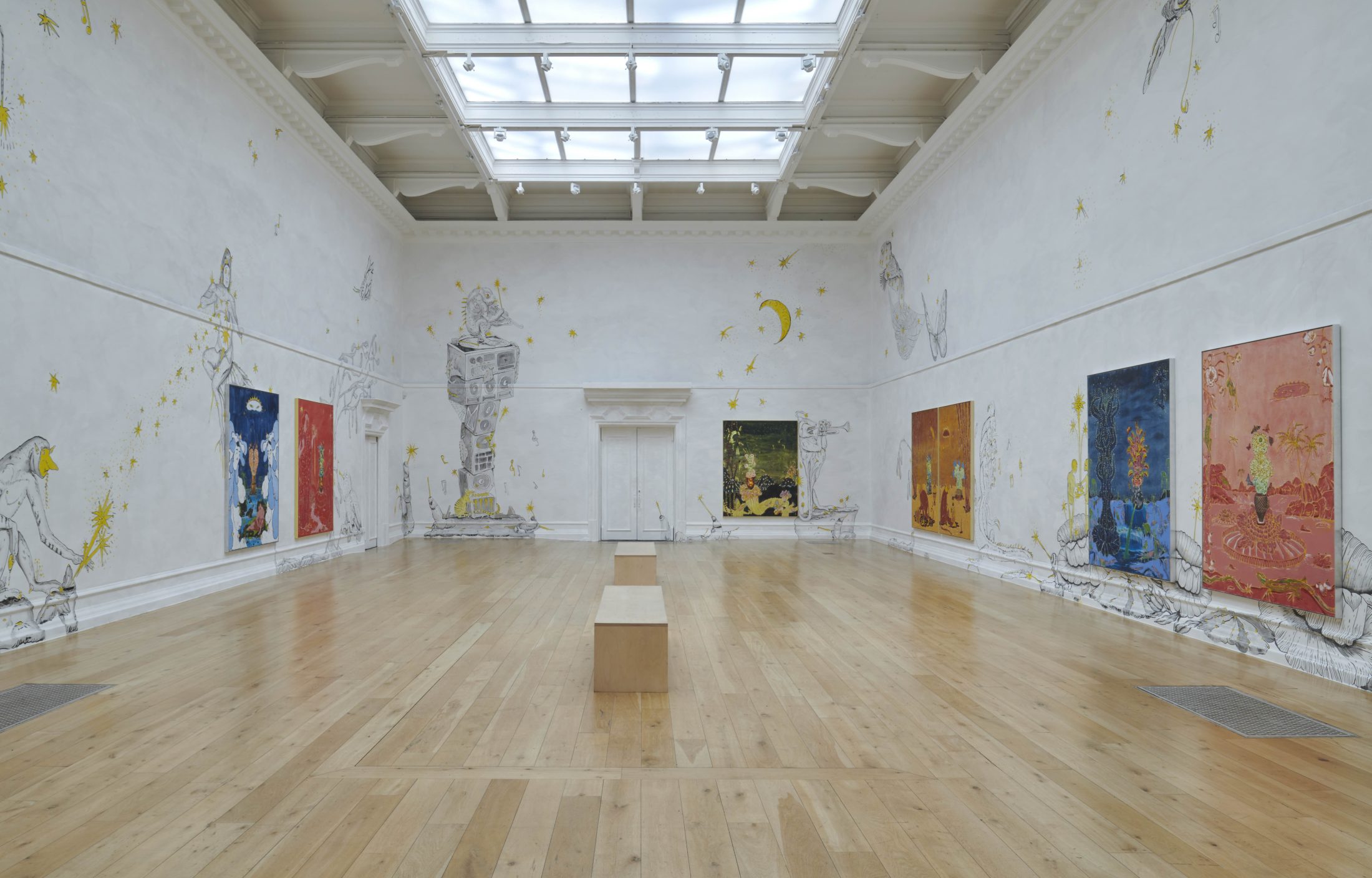
Paulo Nimer Pjota, Encantados, South London Gallery, 2026. Image: Jo Unerhill
Paulo Nimer Pjota is a Brazilian artist who works in oil, tempera and acrylic on canvas. His large-scale paintings draw on art history, popular culture, mythology and folk tales, merging multiple references to create new, imaginary scenarios.
Unlike a story book in which a clear narrative unfolds, Pjota’s works leave the viewer to make their own sense of his fantastical scenes.
With so much to see in his work, we picked out five things in the exhibition to spot when visiting.
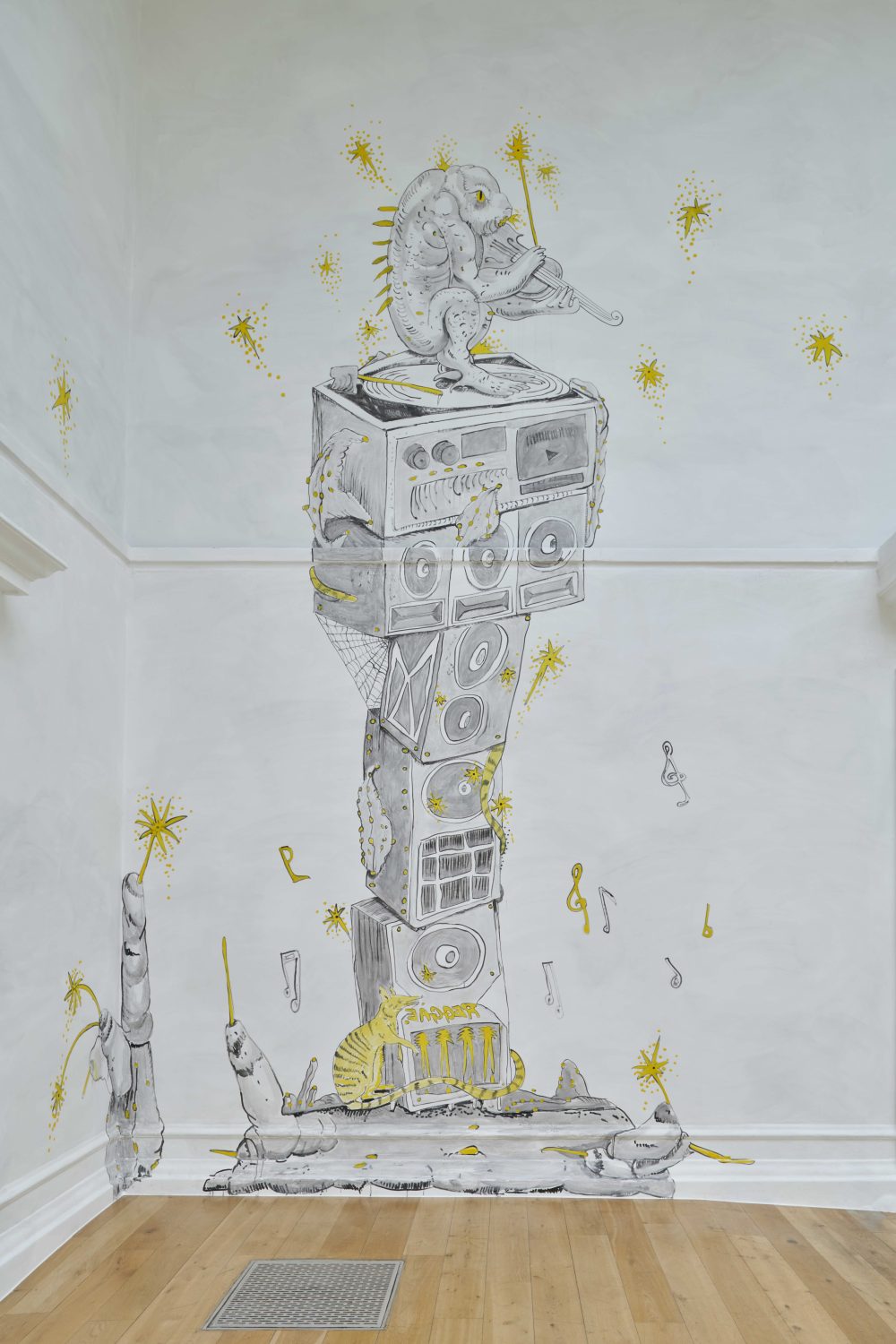
Paulo Nimer Pjota, Encantados, South London Gallery, 2026. Image: Jo Underhill
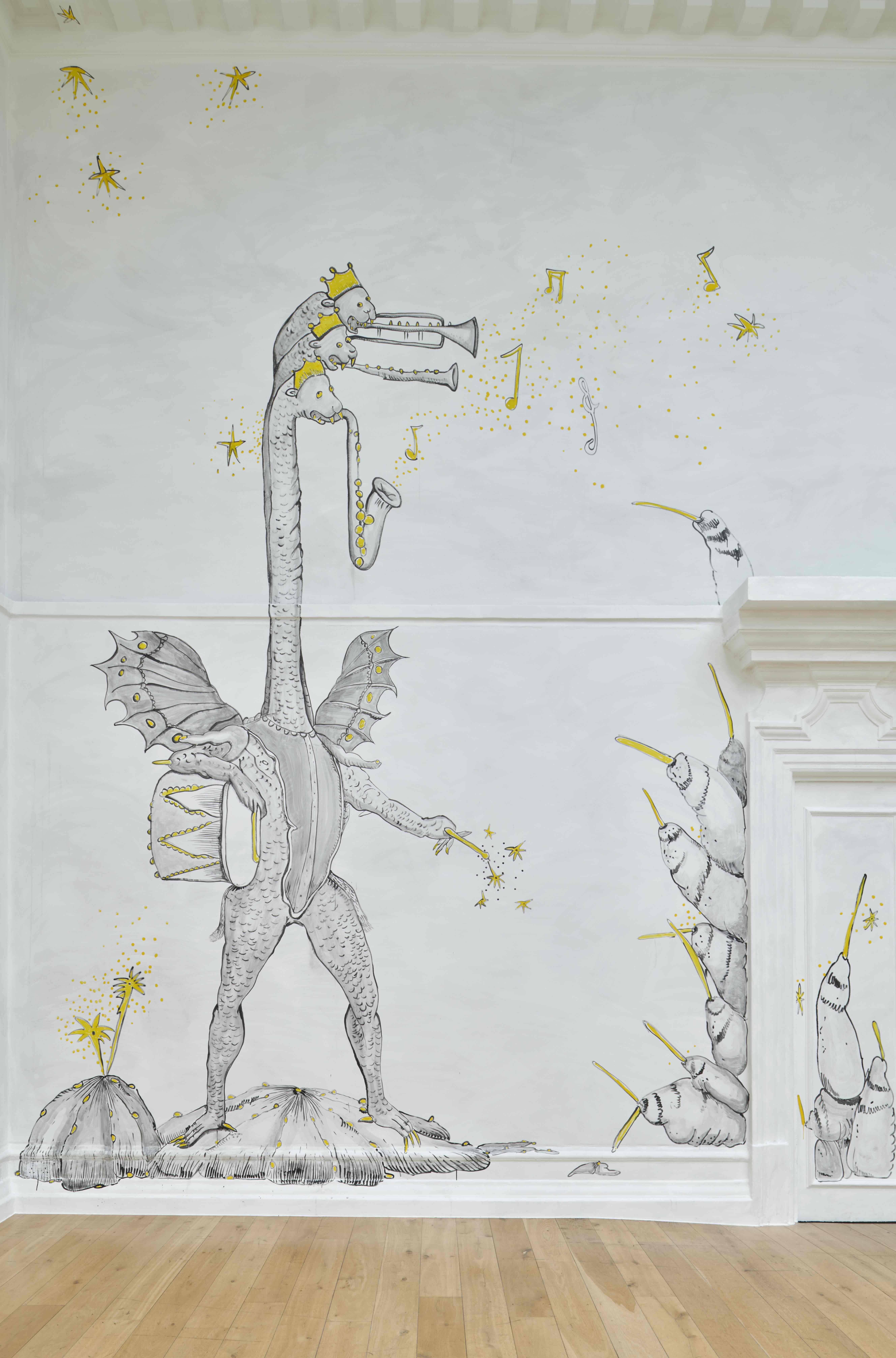
Paulo Nimer Pjota, Encantados, South London Gallery, 2026. Image: Jo Underhill
1. Music
Pjota says: “I think of my process as being like a hip-hop producer. In hip-hop, they use alot of samples. I use alot of samples in my work as well. I remix images out of context – images from the old world are layered with the contemporary world.”
In the Encantados exhibition there are several direct references to music. At one end of the Main Gallery, he has depicted a towering block of speakers, with the word ‘reggae’ written across one. Sitting on the top, a frog-like creature is poised to play the violin. At the other end of the room, a three-headed monster beats a drum while simultaneously blowing trumpet-like horns from each of its heads. Elsewhere, a figure plays the bagpipes, encouraging us to wonder what Pjota’s fantasy orchestra sounds like.
2. Vases
Vases, urns, pots and ceramics are images which recur throughout Pjota’s practice. Vases can be seen as containers of life, often symbolising the human soul. Through the ages they have been associated with various cultural traditions, artistic expression, social status, wealth, health and longevity.
In 2022, Pjota titled his exhibition at François Ghebaly in LA Every Empire Breaks Like a Vase. Paintings in this show included bronze and resin sculptural elements.
In his exhibition at the SLG, we are reminded of Pjota’s use of remixing, of both ancient and new forms. Perhaps he is exploring our connection to ancient civilizations and collective memory.
Often, the vases, flowers and butterflies in his work appear strangely more ‘real’ than the dreamlike environments around them. They are sharp and clear, in comparison to more hazy, surreal figures and backgrounds, so that we notice these shining vessels.
3. Butterflies
Butterflies can refer to the soul, transformation, renewal and rebirth, and in different cultures represent joy, love and the spirits of the deceased.
In Fábula (Fable), 2025, butterflies emerge from the stomach of a god-like figure as if being born. This image also refers to feelings of excitement, or ‘getting butterflies’. This double meaning or play on words is also something that’s repeated across imagery and the titles of his work.
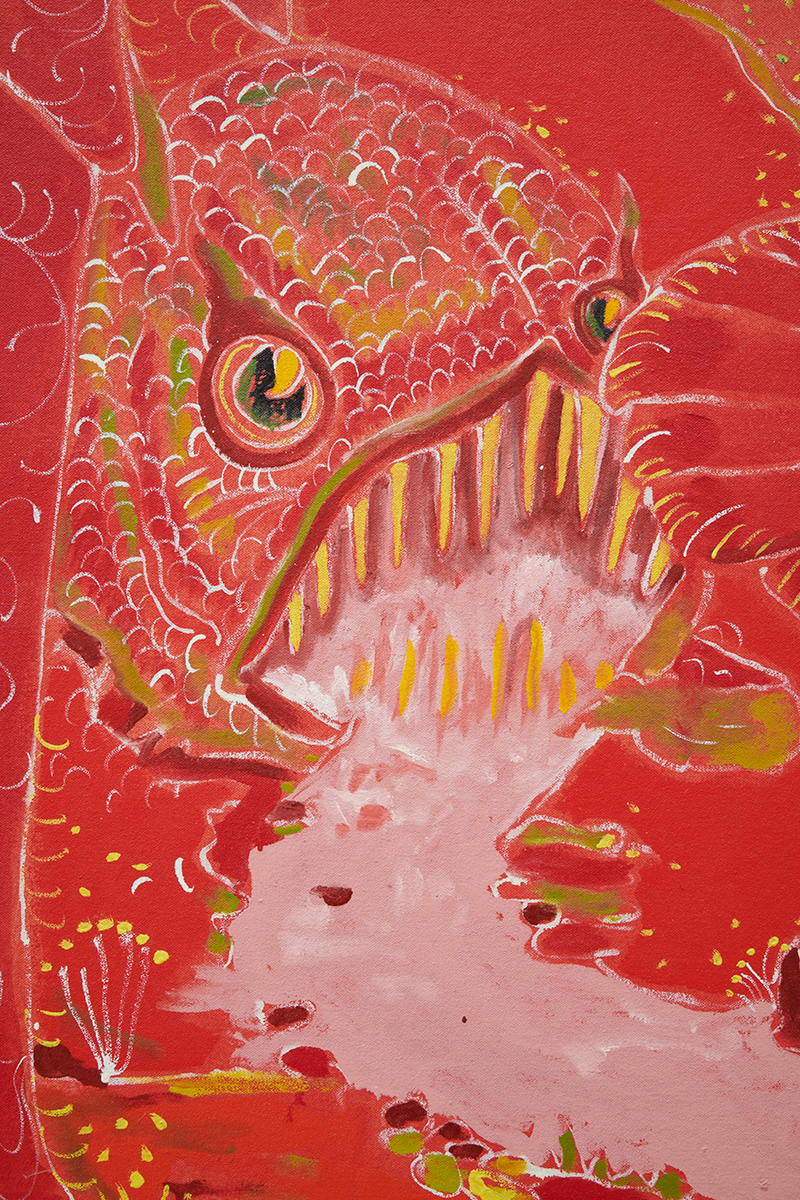
Paulo Nimer Pjota, Encantados, South London Gallery, 2026. Image: Jo Underhill
4. Foreboding
The exhibition’s title, Encantados, meaning enchanted in Portuguese, draws on the dual definitions of a word which can refer to being charmed and filled with delight, but also to a state of being placed under a spell or bewitched. The potential for both positive and negative readings, and the tension between them, runs throughout the show.
Although his paintings are colourful and playful on the surface, danger, predation, and entrapment are important undercurrents throughout the work in the show.
A bird and butterfly carry a web, ready to catch their prey. A fish with large teeth stares out at the viewer from a deep red painting. A crocodile crawls to the edge of a canvas, poised to crawl out into the gallery.
5. Moving beyond myths
In his studio, Pjota assembles imagery from books, magazines, museum collections and visual archives. In some ways his work is like a cabinet-of-curiosities. He paints Greek gods, characters from story books and sometimes even depicts family figures.
Speaking to The Guardian, he says: “Mythology has always been interesting to me,” “Stories I heard in my parents’ house, in the media, these things form a big part of our life from a very young age. Becoming a father myself I started reading a lot of fables to my son and I was looking back on the drawings I used to make when I was a kid. Crazy animals, anthropomorphised nature.”