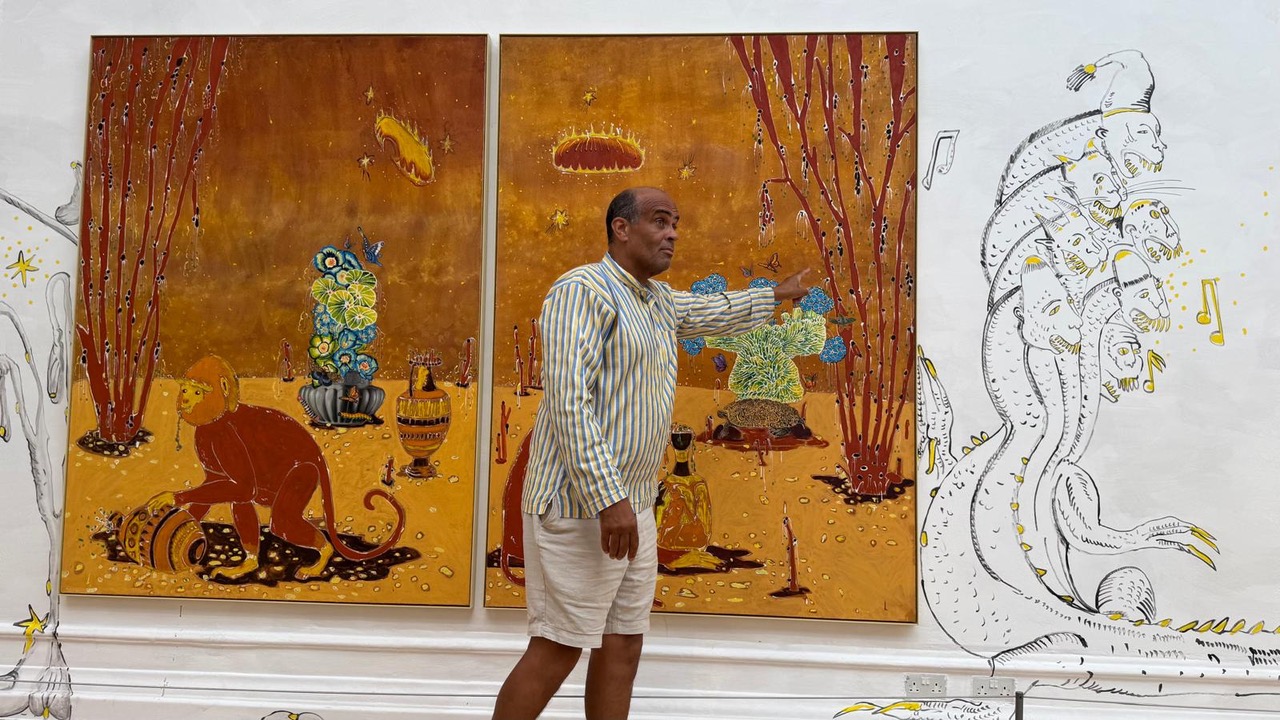
Martin Glover facilitating a tour of Paulo Nimer Pjota's Encantados at the South London Gallery, August 2026.
For Martin Glover, an architect, artist and arts facilitator, creating spaces where deaf audiences can engage with art in their first language is central to his practice.
Through Digitspace, Martin delivers tours, workshops and creative projects in British Sign Language, bringing together art, conversation and shared experience. Martin (via a BSL / English Interpreter, Rachel), kindly spoke to us about his journey from architecture into arts facilitation, the importance of deaf-led experiences in galleries, and how his tours can create a more open and participatory way of engaging with art.
Could you introduce yourself and tell us about what you do?
Hi, my name is Martin Glover. This is my sign name, Martin [alternative sign sequence of ‘me, me me]. My primary background is as a freelance architect, but now I don’t practice much as an architect. I’m much more focused on my work as an arts facilitator.
I work everywhere across the UK in all different regions and cover lots of different themes. Not only do I cover contemporary art, I am also involved with street art which is definitely a great starting point for people who have no kind of understanding or previous experience with the arts. Also, I work a lot with sculpture, and I do some history tours, not a huge amount but there are some projects that are of interest that would be considered historical. I do nature walks as well, and also light art, like light festivals.
Also, I am sort of an artist myself. I use the term loosely. It’s difficult for me to say, ‘yes, I’m an artist’ because I’m an architect. So, it’s a bit of a tricky one to declare myself an artist, but I do digital art. My artist name is Gloverman. And because of my work in digital art, I also create some murals and street art linked to my digital art. It’s generally always linked to sign language arts. For example, using hands and using the British Sign Language alphabet, which is called finger spelling.
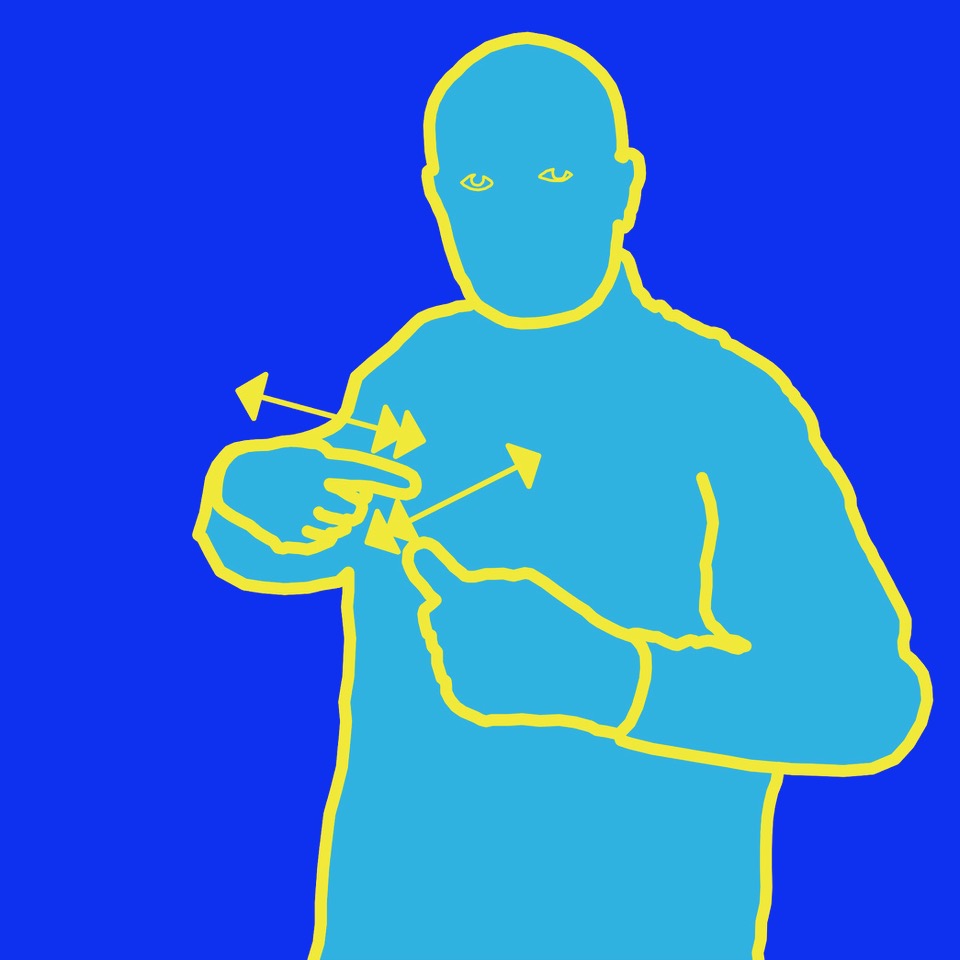
‘Martin’ in BSL.
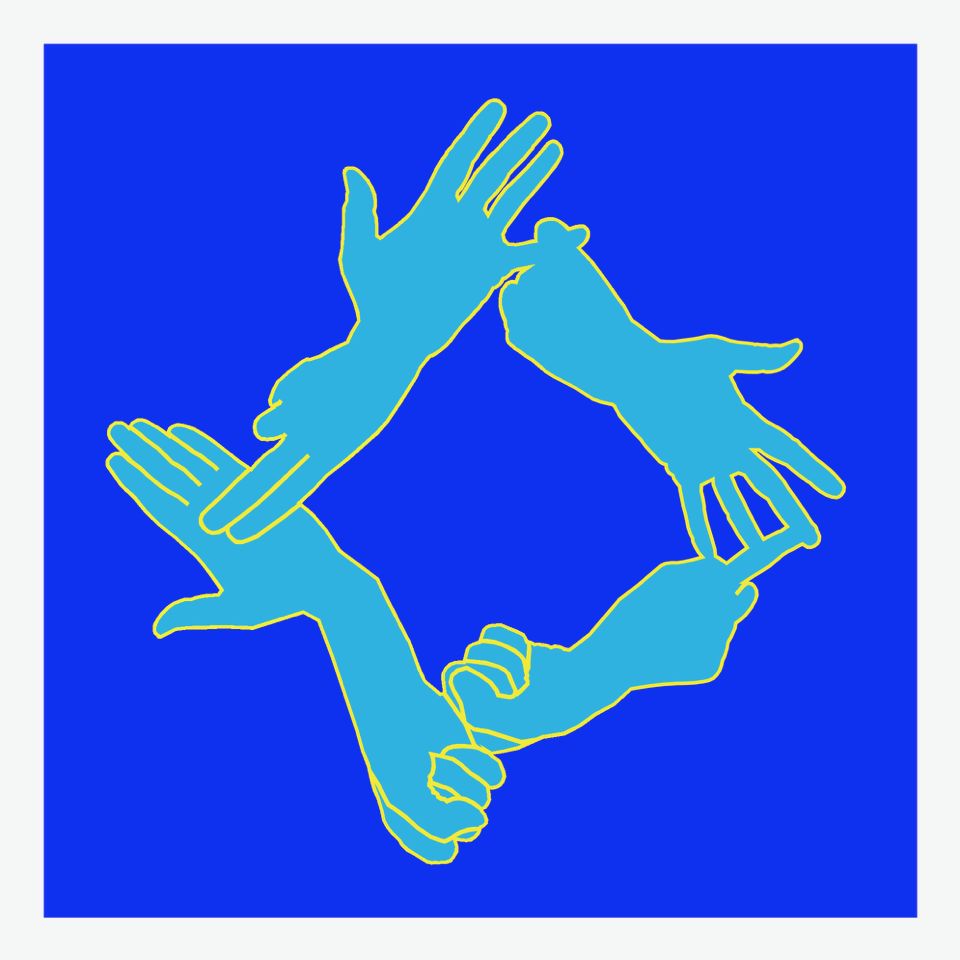
‘Sign’ in BSL.
How did you first become interested in architecture and contemporary art?
In my childhood, I lived in Colchester. So, here’s a little bit of a history lesson for you. It was the original capital of Britain. I think the first recorded capital 2000 odd years ago. Before London, Colchester was the Centre of Britain. There’s lots of history within the town and that’s really what made me interested about the built environment and finding out more information about Egyptians, Romans, Greeks and history and the link with architecture. I was interested in the landscape and how things change over time.
During my later school years, they asked me what I wanted to become, and I said I wanted to become a landscape architect, and the careers advisor said to me, “No, no, poor deaf boy, you wouldn’t be able to cope in those kinds of workplace environments. You need to lower your expectations, so that’s not suitable for you. Maybe an architecture technician would be a more appropriate role for you because you’re deaf.”
At that time, I was like, ‘Oh, all right then. Okay, fine,” I accepted that.
When I’d finished training as a technician, I thought to myself, no, actually I can go on to become a proper architect and go to university.
Before I was a qualified architect - so after my postgraduate diploma - there wasn’t really any work for me as an architect. So, then I started travelling, doing voluntary work. I worked in Africa for a while. Then I decided to come back to the UK and thought, okay, what am I going to do for work? I wanted to work in the deaf community, so I found a job working in mental health services, specifically for deaf people, a specialist mental health services. And my role was in creative arts ‘education’, doing creative therapy with deaf patients, that led me to a better understanding of working with people. I only did that for a short time, about two years, and then I went back to my architecture practice after that. So that’s really where I became a lot more passionate about art and working with people.
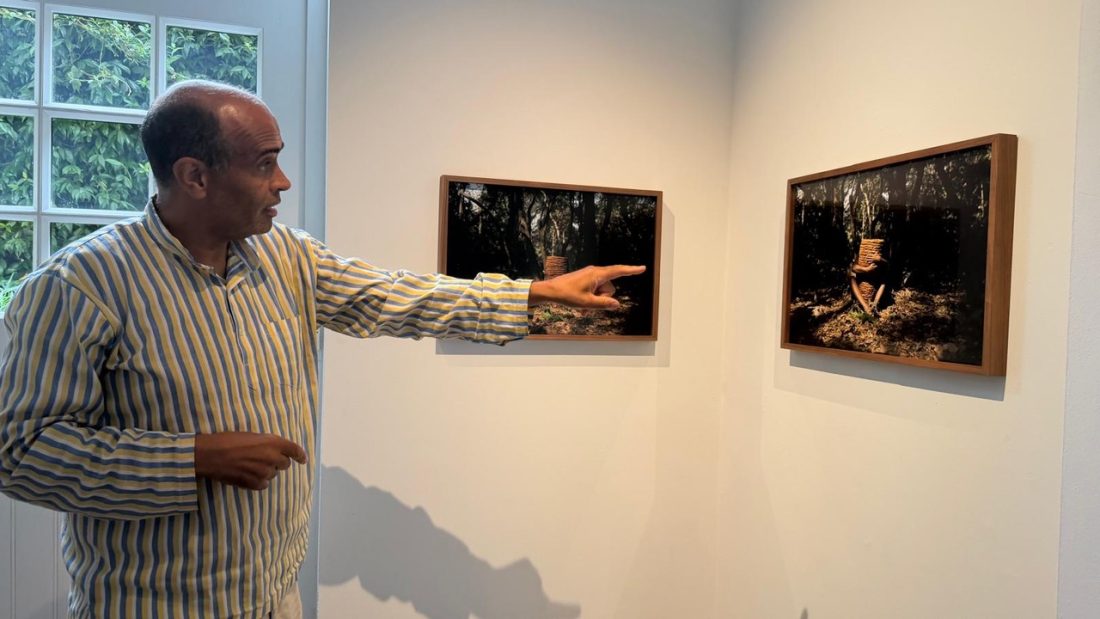
Martin Glover facilitating a tour of Ranti Bam’s Sacred Groves at the South London Gallery, August 2026.
What does being an art facilitator mean to you?
There are lots of BSL art guides out there at the moment, but I wanted to enhance what’s already available and add an extra level to it by organising workshops and projects. The key is everything is delivered directly in British Sign Language.
For example, this coming Saturday I’m going to Southampton, to the John Hansard Gallery. I’m going to do a tour in sign language of the exhibition, and afterwards we’re going to use their learning space for a creative session. The creative session is inspired by the exhibition that I will have just given the tour about, so it’s about enhancing that experience. The following weekend after that, I’m going to Chatsworth, doing family art workshops. I will be creating a sculpture as part of the workshop. So, there’s variety in my work, and different ways that it manifests.
Why is it important to have deaf-led experiences in galleries?
Deaf-led experiences vary, and it’s not all the same. We have a few deaf guides working professionally, offering tours in sign language and there’s a variety of people and styles. People have their own way of delivering tours, we’re not all doing it in the same way. But the common theme with deaf-led experiences is that deaf facilitators and deaf attendees understand each other well. They have that shared experience, lived experience, so, for a deaf audience they feel confident that they can express themselves in their first language to another deaf person who’s going to fully understand them.
There’s a different type of tour that some organisations offer, which is an interpreted tour, where they’ll bring in a sign language interpreter. And so it might be, for example, the curator is leading a tour, but they’ve booked a sign language interpreter so that deaf people can understand the curator. In those scenarios, it just doesn’t work in the same way because the curator isn’t going to be able to relate directly to a deaf person. There are significant cultural differences. There’s a lack of understanding and lack of lived experience. So, that’s why a hearing person providing a tour with an interpreter is just not the same as a deaf-led tour.
For example, it could be that we pick up on something within an art piece or a painting or something, we can see some relevance with sign language, and then that’s how we then communicate that to the group. Or perhaps it could be an image that we know and we relate to the deaf experience and we’re going to bring that cultural meaning and richness that a hearing person is just not going to identify with.
So, a hearing person won’t know how to relate to a deaf group, so just providing an interpreter doesn’t make it an accessible experience. But having a deaf, facilitated experience is completely different.
However, there is sometimes a place for interpreted tours, it really depends on the context. They can sometimes be useful, if there’s a lot of facts and history there - that kind of factual information needs to be presented rather than talking about personal experience. But in contemporary arts, it’s more about your perception, your experience of the art and your personal view. So that’s why deaf-led tours are more relevant for contemporary art.
Have you had any interesting reactions on tours?
Generally, the deaf groups that come along on the tours really appreciate the way that I facilitate the groups, because I always make sure that we’re on an equal footing. People may come along and they think, ‘oh, I don’t know anything about arts and this person’s the expert,’ but I try to change that and say, we’re the same. I’m not trying to be some superior expert and appear that I know everything - we’re exploring the art together. It needs to be a two-way or multi-way conversation, it’s not just me talking at them. I ask people what their views are and say, ‘yeah, I agree’ or we discuss it among the group, and that then makes the group feel more confident. They’re not embarrassed and they don’t feel shy and they can talk openly about the art. We can discuss it together. It’s a lot more engaging.
I do know that people wouldn’t attend if I wasn’t providing those tours. They would not come along on their own. They come along because they like what the tour offers them and that it’s an engaging participatory experience.
I think the simple reason is, if you go yourself to an art gallery sometimes you don’t know where to get information from. There might be written information, but often it could be that some of the English and the language in the written information is quite academic and doesn’t necessarily make sense, as it’s not in layman’s terms, so lots of people are not going to be able to understand that. Also, some deaf people don’t have strong literacy skills, they can’t read English very well anyway, so then they think, ‘What’s the point of me going to a gallery or a museum if I’m not going to understand any of the information; I’m not going to understand the art?’
I’m sure sometimes you must have experienced this yourself. You might go somewhere and you might want to maybe have small talk with the other people in the gallery space. But deaf people can’t do that. They can’t just chat to members of staff or other visitors in galleries because of the language barrier.
Can you tell us more about Digitspace?
I came up with the name because I was trying to develop a project to improve accessibility within the arts for deaf communities outside of London. Initially it focused on the northeast of England. The name came up because digits and space are what’s on our hands that we use for sign language and space. So that’s where it’s like a play on words in a way and a play on signs, and at the same time, in parallel with sign language and accessibility.
Now I use this name - it’s not a company name, it’s just my branding. It’s a way of showing that Digitspace is committed to reaching out and making the arts more accessible through sign language.
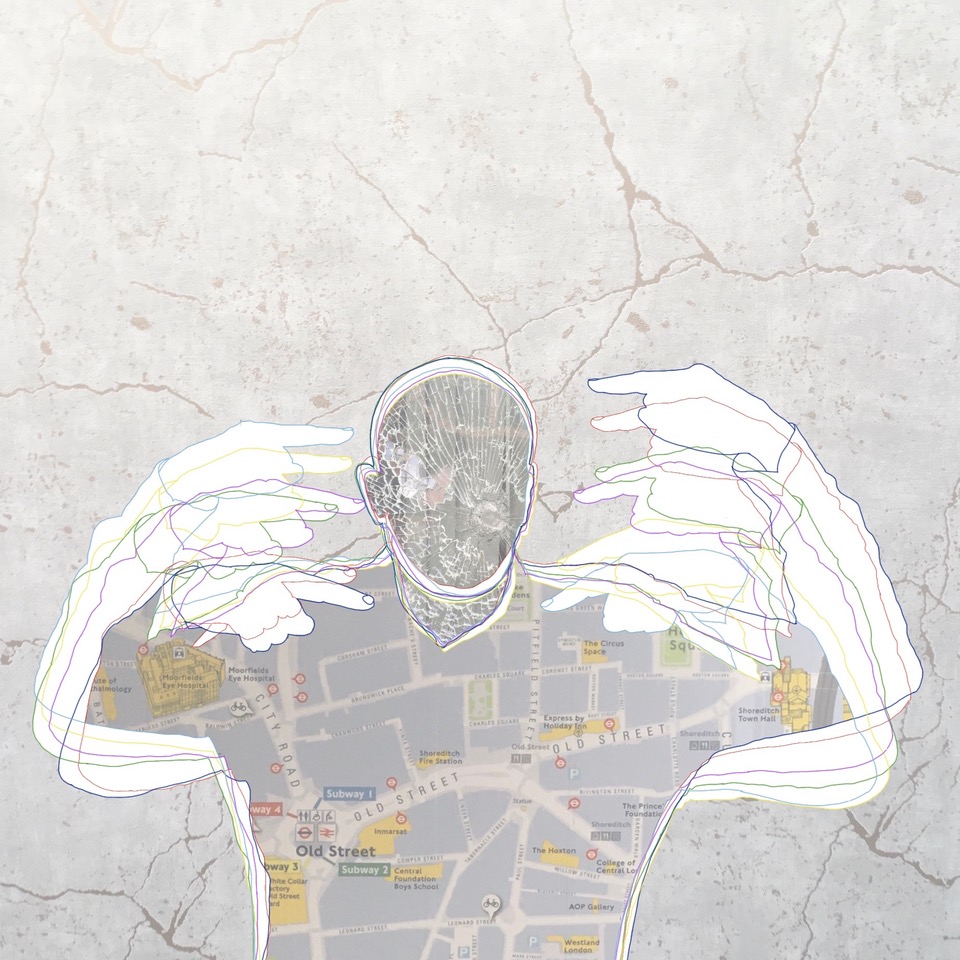
Martin Glover, A Binary Londoner. 2026
How would you describe your tours to someone who hasn’t been on one before?
I would say to them, art galleries are not just for highly educated, posh people, sophisticated people. You do not have to have an understanding of arts already. You can come along with me, we will talk about it together.
We can just discuss it and you can express yourself and it is space for you as well. Also, afterwards we will have a lovely social and a catch up, we’re not just there for the tour. There will be a social element too, so you can enjoy that as well.