
Introduce yourself. Tell us about your practice. How has it developed over time?
I’m a multidisciplinary artist working across film, video installation, sound, paperwork and printmaking. My ongoing series Episodes of Horror uses the horror genre to explore historic and contemporary representations of Blackness, particularly the ways Black bodies, trauma and mental illness are framed as threats within society. Through this framework, I question the emancipatory possibilities of creativity, how reclaiming and repurposing these images might open new ways of seeing. John, the work featured in New Contemporaries, forms part of this series.
‘Episodes of Horror’ uses horror to discuss representations of mental illness and trauma as experienced by or projected upon Black bodies. What drew you to horror for this work?
Horror has been a genre I have been drawn to from an early age, so it resides in me as a creative, expressive and cognitive tool. At some point, I started to think about my own experiences, living with mental illness and also the experiences of family members.
In the Black community, mental illness was a taboo subject – rarely spoken about. There was a lack of understanding around mental illness and the reality of horror stories of folks we knew who ended up in state custody, either in psychiatric hospitals or prison.
Simultaneously, the racism I witnessed and lived in the UK often felt indistinguishable from what I saw in horror films – the way Black grief, anger, or vulnerability could be misread as danger. So, horror was always just there in one form or another. ‘Episode of Horror’ was a framework I eventually came up with to creatively and maybe even safely explore some of the things I was wrestling with.
What do you hope visitors take away from the work? How important is discomfort in the experience?
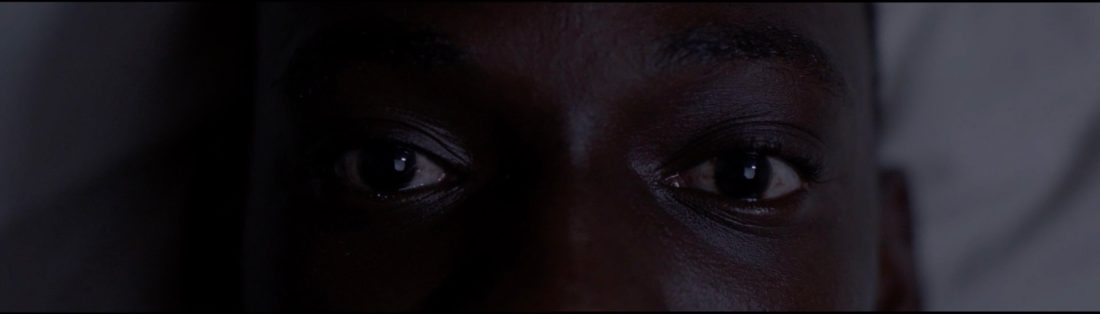
I want viewers to feel the work – to recognise the humanity and suffering of Black people not as entertainment, but as part of the full human story. I want them to question what violence looks like, where and how it manifests, and how institutional racism shapes all our lives. If discomfort arises, I hope people sit with it rather than turn away. Discomfort can be a powerful teacher.
Your work in New Contemporaries, John, blurs fiction and reality. What does fiction allow you to do that documentary wouldn’t?
In John, fiction allows me to probe real events while invoking or speculating alternate possibilities. It offers poetic entry points into interior worlds – delusion, instability, dream logic. In John, reality becomes slippery; familiar structures are unsettled. There’s a subtle “red pill/blue pill” scenario running throughout that I don’t talk about, but when you see it, it adds another layer to interpretation of the work. The fictional narrative is seductive and draws the viewer in, in useful ways. There is something about building the world together – in the suspended reality of the gallery space, that is important to the concept of the work.
Do you see Episodes of Horror as a form of activism? What is the role of art in contexts where systems have failed?
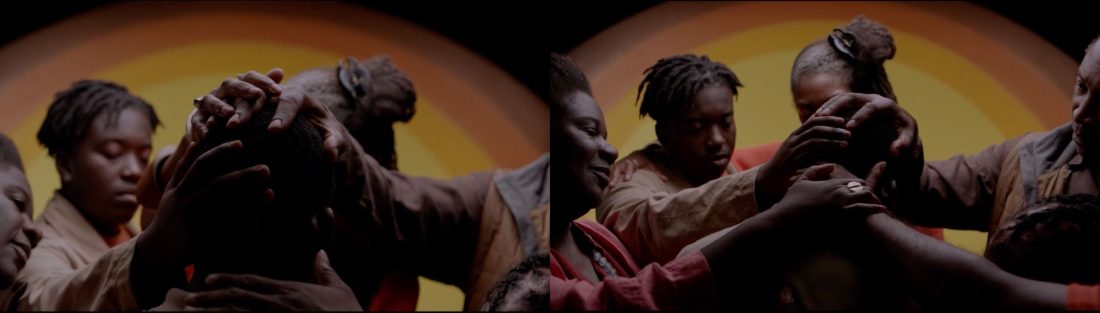
I view Episodes of Horror as art that makes space for collective dreaming, to create possibilities for our world. Film is a perfect medium for that, because it requires people to come together to make something that once seemed impossible.
The work is heavily inspired by activists and cultural leaders. Several ‘actors’ in the film have lived the very events referenced and are involved in real-life justice work for family and community members who have died at the hands of the state. The chant “come the light, come the hope” comes from an anonymous poem I found in a political zine at the Black Cultural Archives. The “incident” in the work is a composite drawn from testimonies in real inquests into state brutality. The work of psychiatrist and political philosopher Frantz Fanon was foundational in shaping the work.
Are there filmmakers or moving-image artists you admire or draw from? Were any particular works influential for John?
Loads – Omer Fast’s Nostalgia, which I saw at South London Gallery years ago, has stayed with me and remains hugely inspiring to me. For John, Dario Argento’s Suspiria is a clear visual reference, and the sound design of Masaki Kobayashi’s Kwaidan was another, the list could go on.
What’s next? What are you working on now?
At the end of March, my film Las, Fiya (2024) will screen in the short fiction competition at Nouveaux Regards Film Festival in Guadeloupe. I’m thrilled to be included, even though I won’t be able to attend.
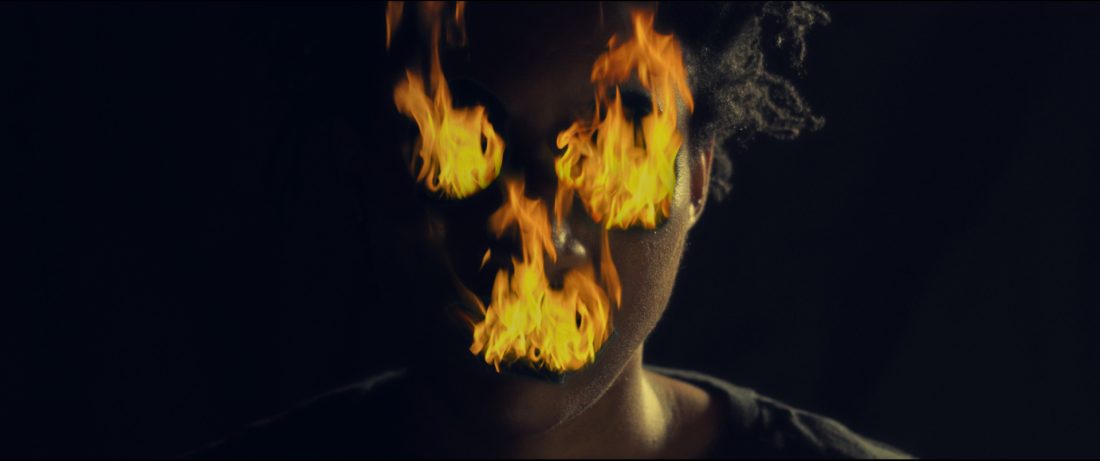
I’m also developing a new Episodes of Horror project for my Stanley Picker Fellowship, exploring thresholds – both conceptual and physical – the “physics of Blackness,” and the creation of monsters. I’ll be travelling to West Africa for the first time to shoot new material, as well as experimenting with motion and facial capture to build monsters from my own image.