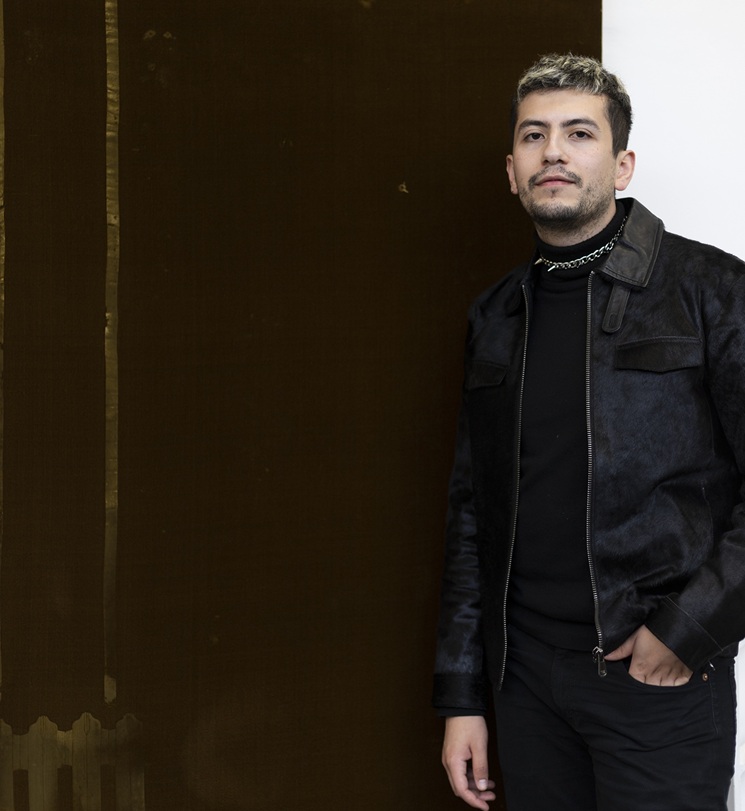
Can you tell us a bit more about your practice?
I’d say my practice begins with an obsession with traces – the small, unremarkable remnants that cling to spaces long after people have moved through them. I’m drawn to the gestures humans leave behind, not only in relation to one another but also in their negotiation with the physical world around them.
More recently, I’ve become fascinated by the image as one of these remnants: something layered rather than instantaneous; something built slowly through residue, memory, and surface. I’m interested in image-making as a temporal practice – an accumulation rather than a snapshot.
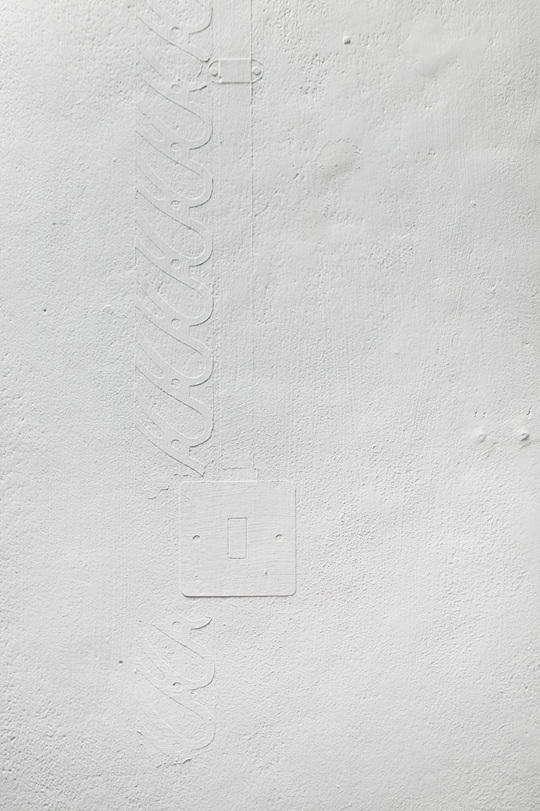
You’re interested in the idea of ‘white walls’ as a subject and material, especially how they record changes over time. Can you tell us about what draws you to this?
White walls entered my work almost unintentionally, as fragments I kept noticing while looking for examples of material “remainders” in built environments. They’re everywhere – blank, supposedly neutral, yet constantly absorbing the marks of our daily improvisations. Hooks added and removed, cables threaded through, holes plastered over, new coats of paint layered again and again – each gesture leaving behind a small disturbance.
I find them compelling because they’re such pliable surfaces. They’re usually the first thing altered when we need to adapt a space for living, and the first thing disguised when those needs change. You can read time on them very easily, almost like rings in a tree trunk – except the history isn’t celebrated; it’s constantly being concealed or reworked.
When I moved from Colombia to England, I became even more attuned to these surfaces. London, a city that has rebuilt itself repeatedly on top of its own remains, feels full of these palimpsest-like walls. They aren’t dramatically different from the ones I grew up around in Bogotá, but here they seem more exposed – more insistently present.
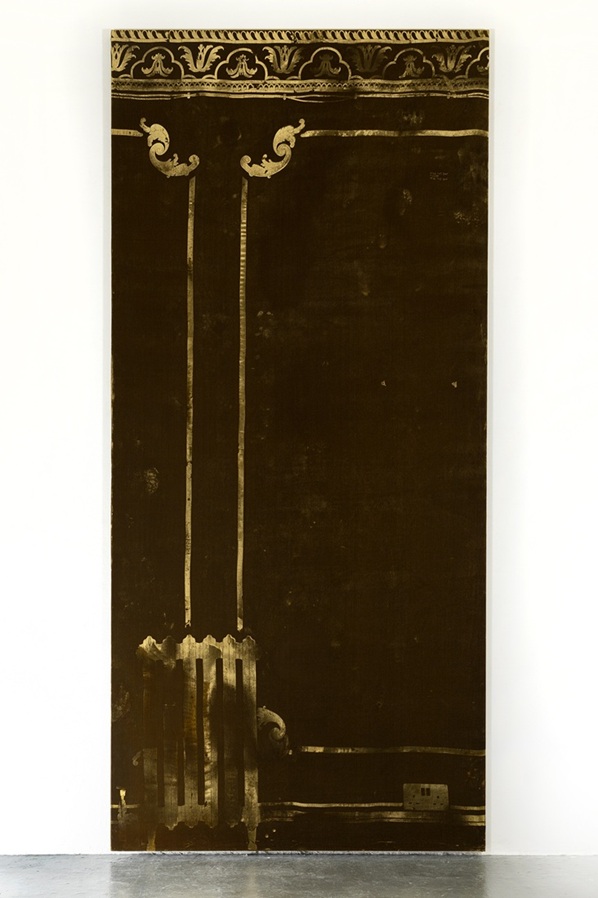
Your work suggests human presence, sometimes without showing people. Why is this indirect approach meaningful to you in the work that’s in New Contemporaries?
Lately I’ve found myself thinking about ghosts – not in a literal sense, but as a metaphor for the presence that lingers without needing a body. I’m interested in how space can hold the memory of a person, or a gesture, without any figure appearing in the work. It feels more honest to the way I experience the world: full of things that exist on the edge of visibility and are constantly fading or transforming.
By focusing on these indirect presences, I’m trying to hold onto things that are always at risk of disappearing. There’s something deeply melancholic about capturing traces without showing who made them. It becomes less about portraiture and more about atmosphere, about the emotional weight of what’s been left behind.
The use of velvet is particularly interesting. In previous works, you’ve also combined photography and textiles. Can you explain your choice of materials in your work?
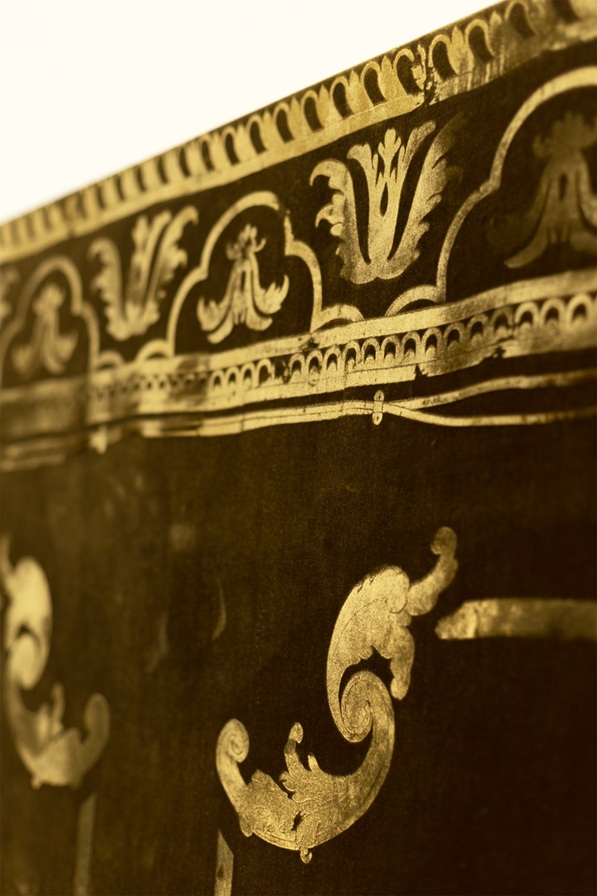
I gravitate toward materials that carry time on their surface – materials that register touch, labour, or repeated handling. I think of images as something that inhabit surfaces, so I often choose materials that allow me to build an image slowly: through embroidery, beading, layering, or abrasion. The time spent with the material becomes part of the final work, embedded in its texture.
My interest in textiles is also rooted in my fascination with ornament – especially within domestic spaces and the long histories of craft associated with them. Ornament has often been dismissed as decorative or “low,” yet it forms a crucial part of how homes speak. Textiles, in particular, hold centuries of cultural knowledge, technique, and symbolism. When I work with them, I’m thinking less about the softness of the material itself and more about its capacity to hold labour, repetition, and time.
Previously, you’ve used photos from your family archive. Do you see your work as very connected to your own history and identity?
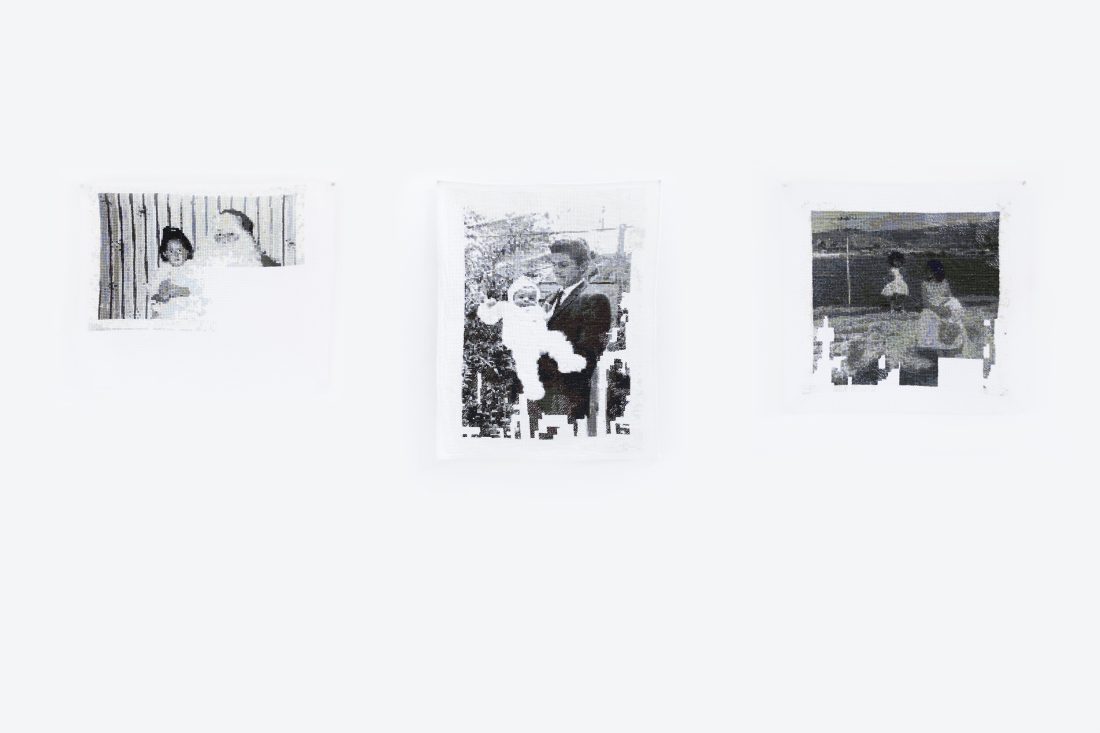
My work isn’t autobiographical in any direct sense. I did use family photographs in a piece from 2019, but that was a specific exploration rather than a continued personal thread. While my interests inevitably reflect aspects of who I am and how I think, I’m not trying to construct a narrative about my own identity. I’m more drawn to broader questions about perception, trace, and memory – things that extend beyond my own story.
You have also said that you’re intrigued by concepts of “highbrow” and “lowbrow” in culture. Can you expand on this? Is this contrast something you want to highlight or question?
The divide between highbrow and lowbrow fascinates me because it’s so deeply constructed – shaped by cultural elites on one side, and by everyday practices and popular culture on the other. Yet the two are constantly borrowing from one another. They form a kind of loop, where taste and value migrate back and forth over time.
I’m especially drawn to the moments where this exchange produces something absurd – where tradition and mundanity collide. Many of my works play within that slippery space: using traditional craft techniques to depict ordinary, overlooked subjects, or using inexpensive materials to approach themes usually considered refined or elite.
For me, the tension between high and low is a generative place. It opens up possibilities for questioning what we consider valuable, who gets to define taste, and how craft can be used to subvert expectations rather than simply reinforce them.
In 2025, Manuel Hernandez Rivera was selected as one of 26 artists to be part of New Contemporaries. White Wall Variation One is currently showing at the South London Gallery until 12 April 2026 and will travel to MIMA later in 2026.
Stay up to date with all of our exhibitions and events by signing up to our email list.